
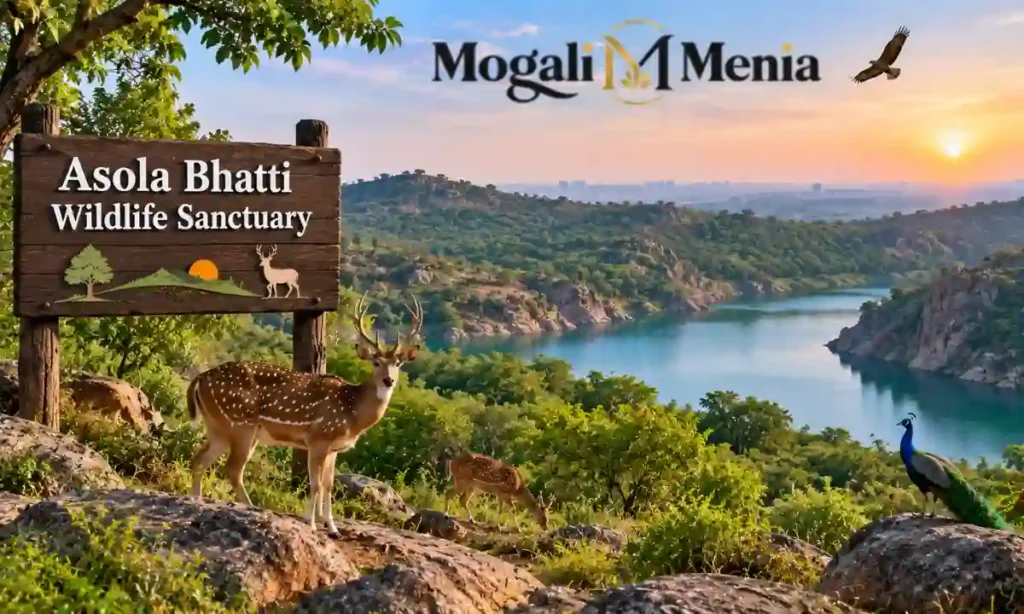
Asola Bhatti Wildlife Sanctuary is undoubtedly one of the most unique spots to visit regarding the Nature and wildlife in South Delhi. Spanning the rocky terrains of Aravali Hills, the sanctuary is a place where you can explore the forests, lakes, grasslands, birds, and wild animals near one of the busiest metropolitan cities in India.
The sanctuary is quite famous among tourists owing to the forest landscape, wildlife, nature trails, and Neeli Jheel, which is another name of the Blue Lake. It is possible to escape the chaos of Delhi and enjoy something completely new about the city at this spot. As a tourist, nature lover, or photographer, it would be exciting to pay attention to Asola Bhatti, as it is an unusual combination of an urban destination and semi-arid wildlife habitat.
Traveller Rating and Experience
Asola Bhatti Wildlife Sanctuary has had a variety of interesting experiences reported by the visitors. Many travelers have described the park as an oasis of tranquility wherein tourists get to see the Aravalli ranges without having to travel too far from Delhi.
While some people like the drive through the jungle, rocks, water bodies, and animals, others have stated that the arrangement for visiting can change, as well as other things depending upon the season. The sanctuary is more ideal for people who love nature tourism as opposed to zoological experience with wildlife.
About Asola Bhatti Wildlife Sanctuary
The Asola Bhatti Wildlife Sanctuary is situated in the southern part of Delhi near the Surajkund Road. It is an essential component of the Delhi Ridge that conserves a part of the ancient Aravalli terrain. Different types of vegetation such as dry scrub forest, rocky hills, grassland, water bodies, and degraded mining lands can be seen in the Asola Bhatti region. A diverse range of mammalian species, birds, reptiles, butterflies and other forms of wildlife are found here. An interesting feature of Asola Bhatti is that despite being situated in a fast-growing urban zone, it is a safe haven for many kinds of wildlife.
Asola Bhatti Wildlife Sanctuary Quick Facts
| Feature | Details |
|---|---|
| Name | Asola Bhatti Wildlife Sanctuary |
| Location | South Delhi, Delhi |
| Landscape | Aravalli Hills and Semi-Arid Forest |
| Famous Attraction | Neeli Jheel |
| Known For | Wildlife, Birds, Nature Trails and Forest Landscape |
| Major Wildlife | Nilgai, Leopard, Golden Jackal, Jungle Cat, Hyena |
| Birdlife | Resident and Migratory Birds |
| Best Time | October to March |
| Popular Activities | Wildlife Watching, Birdwatching, Nature Walks and Photography |
| General Visitor Hours | Around 7:00 AM to 3:00 PM |
| Weekly Closure | Monday |
| Nearby Area | Surajkund and Faridabad |
| Recommended Duration | 3–4 Hours |
Why Is Asola Bhatti Wildlife Sanctuary Famous?
Asola Bhatti is a popular location due to the preservation of a crucial section of Aravali’s landscape in the NCR. Asola Bhatti serves as a sanctuary for wildlife in spite of the surrounding urban development that is taking place at a rapid pace.
One of the most appealing aspects is that of the diversity of the birds that can be found in this sanctuary. It is home to several hundred bird species, both resident and migratory and raptors. Winter is particularly rewarding for bird watchers because the migratory birds will flock into this area because of the wetland and forest areas.
Wildlife in Asola Bhatti Wildlife Sanctuary
Various types of animals like mammals, birds, reptiles, butterflies and other forms of fauna thrive in Asola Bhatti. Although the environment might seem arid, it actually provides vital protection to various species as well as food.
Some of the mammals include leopard, striped hyena, nilgai, golden jackal, jungle cat, ruddy mongoose and Indian porcupine. Spotted deer along with many other kinds of animals can be found in some parts of the sanctuary. However, visitors should remember that sighting of wildlife depends greatly on various factors like season and movement of the animal. Therefore, visitors should appreciate the entire natural environment.
Nilgai in Asola Bhatti
One of the largest mammals found at Asola Bhatti Wildlife Sanctuary is the nilgai. The nilgai, also called the blue bull, is India’s largest antelope and is highly adapted to grassland and scrub habitats. Nilgais can occasionally be seen roaming about or eating from the vegetation. It is fascinating to note that these large herbivores have been able to survive in an otherwise protected environment amidst urbanization.
Leopard in Asola Bhatti Wildlife Sanctuary
The leopards are some of the most fascinating creatures found at Asola Bhatti. The rocky slopes and scrubby vegetation found here form an appropriate environment for the leopards.
Nevertheless, it is not guaranteed that one will have an encounter with any leopard while visiting the site since leopards tend to be elusive and will always avoid people. People should never try to track down or go looking for a leopard on their own.
Striped Hyena and Golden Jackal
Another fascinating member of the carnivorous family that exists within the sanctuary is the striped hyena. These creatures are nocturnal and elusive by nature, making sightings difficult. However, their presence cannot be overlooked because they are an integral part of the food chain in the sanctuary. Another carnivore species, the golden jackal, is more adaptable in nature than the former and can occasionally be seen in open grounds.
Jungle Cat and Ruddy Mongoose
The wildlife sanctuary is also a home to small carnivores like the jungle cats and the ruddy mongooses. They are not seen very often as compared to big mammals since they tend to sneak around in grassy areas and thick bushes. Watching small mammals can be as exciting for wildlife lovers as watching bigger mammals.
Jungle Safari and Forest Drive
One of the many experiences linked to Asola Bhatti is the journey through the forest, which cuts through the rough terrain of Aravalis. This experience is very different from the regular driving around in the city of Delhi due to the rocky roads, flora, hills, and sometimes even presence of water bodies. Visitors will find various birds and animals during their journey through the forest. Depending on the season and path taken, nilgai, deers, peafowls, monkeys and other small animals may be found.
Neeli Jheel
Neeli Jheel is one of the most prominent attractions associated with Asola Bhatti Wildlife Sanctuary. The lake is flanked by the rocky terrain of Aravalli ranges and forest cover, providing a picturesque setting that gives the impression of being remote despite its proximity to Delhi. It is due to the blue color of the lake that it has become quite popular among photographers. The beauty of the location is accentuated by the hilly terrain and forests surrounding the lake. Access to Neeli Jheel could be controlled and could run on eco-tourism mode.
Wildlife at Asola Bhatti
Sanctuary is the habitat to numerous wild animals. Semi-arid forests and grasslands of the sanctuary are particularly favorable to herbivores and smaller mammals, whereas hidden rocky outcrops offer safe haven to carnivores.
Animal life of the sanctuary comprises of:
- Nilgai
- Leopard
- Golden jackal
- Jungle cat
- Striped hyena
- Ruddy mongoose
- Indian porcupine
- Foxes
- Deer
- Hare
- Monkeys
It may not be possible for every tourist to witness all the above-mentioned animals, since many of them are shy, night-time or wary of humans.
Nilgai
Nilgai, also known as blue bulls, are one of the most visible big mammals found in the sanctuary. These big antelopes have adapted well to the dry grasslands and scrubs of the Aravalli range. Sometimes visitors get a chance to see the nilgai roaming around in open spaces during their journey through the sanctuary. Their size makes them easier to spot compared to other small mammals. For wildlife photographers, an image of a nilgai in the background of rocky Aravalli hills can be quite a beautiful composition.
Leopard
Leopards are among the most thrilling wildlife animals connected with Asola Bhatti. The hills and scrub vegetation of the sanctuary make a good habitat for leopards. Nevertheless, the sighting of a leopard is quite rare and must not be expected at all. Leopards like to avoid human beings and can hide for a long time. It is recommended not to try to spot a leopard along the way of your visit and photograph it.
Birds at Asola Bhatti
The activity of bird watching is considered one of the most pleasant at Asola Bhatti Wildlife Sanctuary. Wooded, scrubby, grassy and aquatic habitats attract a wide variety of birds. One of such birds is peafowl. In addition, visitors may expect to find there different types of owls, raptors, small wooded birds and seasonal birds. The bird life at the Asola Bhatti Wildlife Sanctuary varies depending on the season which makes the sanctuary attractive for bird lovers.
Bird Watching Experience
The early morning is considered the best time for bird watching because the weather is cool, the activity of birds is increased, and the forest is quiet. Binoculars must be carried by visitors. It is also convenient to take a camera with a zoom lens if the birds fly high up in trees and do not come close to people. It is necessary to be patient because many of the birds are more audible than visible.
Aravalli Landscape
The characteristic rough terrain of the Aravalis is a major feature of the Asola Bhatti landscape. Rocky formations, dry vegetation, hills, and open spaces characterize the unique landscape of this area, which contrasts sharply with its surroundings. The Aravalli mountain chain is one of the oldest in the world, and Delhi Ridge represents the northern extension of this geological formation. Asola Bhatti is thus not only a wildlife sanctuary but also an area of Delhi’s natural heritage preserved for posterity.
Former Mining Areas
Some parts of Asola Bhatti have suffered from mining activities in the past. Former mine pits and quarries still exist in certain places. Conservation and rehabilitation activities in these areas have been undertaken with the objective of making them habitable again for local plant and animal life.
Nature Walks
Nature trails offer a peaceful way of discovering Asola Bhatti Wildlife Sanctuary. Rather than being confined to looking at big animals, one can study plants, insects, butterflies, birds, animal footprints and geological formations. Nature walks can prove extremely helpful to individuals seeking to understand the ecosystem of Aravalli ranges.
Attractions for Butterflies and Nature Lovers
There is an array of butterflies and insects found in the sanctuary’s environment, especially when there is abundance of flowering plants. Butterfly watching can go hand in hand with birdwatching and photography. The public should refrain from touching butterflies and insect collecting or plant damage.
Also Read About: Netravali Wildlife Sanctuary, Timings, Wildlife & Travel Guide
Best Time to Visit
The best time for visiting Asola Bhatti Wildlife Sanctuary is considered from October to March. During this period, the weather is better and more convenient for outdoors activities. It is recommended for bird watching since there may be seasonal birds that have come in search of an appropriate habitat. In summer, it becomes very hot and scorching, especially in the afternoon. In monsoon, the plants become green but it may be difficult to explore some of the trails due to wetness.
Timings
The current visiting schedule of the sanctuary runs from Tuesday to Sunday while Monday is considered to be the day off. The visiting schedule of visitors and eco-tourism circuits could differ. The timings of older tourist accounts could be different so it will be better to ascertain the current visiting schedule. In order to see wildlife and birds, morning will be preferable.
Entry Fee
Entry fee to Asola Bhatti sanctuary could be different depending on the chosen eco-tourism circuit and visitor type as well as the vehicle and audio-visual equipment of the visitors.
Eco-Tourism Zones
The eco-tourism experience and facilities for visitors to the sanctuary can be of several types and may include those at the Tughlakabad region as well as the Asola side which is linked to Neeli Jheel. Some of the possible experiences can be that of nature trails, butterflies, nurseries, diversity interpretation, forest walks, etc.
How Long Should You Spend Here?
The average time taken by a person to tour around the sanctuary and the various selected spots can be estimated to be 3 to 4 hours. The time is determined by the type of activity being undertaken and the time spent on observing the animals in the sanctuary. This is due to the fact that photographers or bird watchers will take more time waiting around for the animals.
Visitor Reviews and Experiences
Experiences of travellers make it clear that Asola Bhatti offers totally different experiences according to what is expected from them. While some travellers love experiencing the experience of wilderness in the middle of Delhi, some think that there is need for improvements in terms of facilities as well as access arrangement.
Various travellers have loved the hilly drive, forest area, lakes, as well as the wild life present there. The possibility of watching peafowls, deers, nilgais, foxes, etc., also provides an interesting experience to the visitors. However, there have been changes in the access arrangements regarding Neeli Jheel which needs to be checked before visiting Asola Bhatti.
Family Visit
Asola Bhatti Wildlife Sanctuary is an ideal destination for people who love the outdoors. The kids will get to learn about birds, flora and fauna and the eco-system of the Aravalli Hills as well while not having to be amidst the hustle and bustle of the city. It is imperative that kids are always within earshot of the group. Feeding the animals must be prohibited.
Photography
Photography is certainly one of the best things you can do in Asola Bhatti. The rocky hills, forests, lakes, birds, and wildlife provide plenty of subjects for this purpose. Landscape photography seems to suit the surroundings of Neeli Jheel and the rocky Aravali range. The nilgai, peafowl, and deers are easier to capture through a camera as compared to some other predators of wildlife.
Birdwatching at Asola Bhatti Wildlife Sanctuary
Another interesting activity to undertake at Asola Bhatti is bird watching. There are different habitats in the form of open canopy forests, grasslands, rocky areas, and water bodies, which make a conducive environment for various types of birds. These birds include both resident birds, local migrants, winter migrants, passage migrants, and summer visitors. Some of the commonly sighted birds include peafowl, owls, woodshrikes, malkohas, and other smaller species from the woodland. During the winter season, bird lovers may also see migrant birds near water bodies.
Raptors of Asola Bhatti
Asola Bhatti is especially significant for those individuals who have an interest in birds of prey. The sanctuary has noted quite a good diversity of raptors as well as some of which are globally endangered.
Various species of eagles, vultures, kites, hawks and other raptors could be seen depending on the season. Winter months can be really rewarding for watching raptors. Individuals interested in bird photography need to bring their binoculars along with a camera having a good zoom lens. Early morning hours would usually provide the best opportunity for bird watching.
Neeli Jheel
Neeli Jheel is certainly among the most picturesque sites in Asola Bhatti Wildlife Sanctuary. The lake has earned its name due to its blue color and is set in the picturesque surroundings of the Aravalli landscape.
The journey to Neeli Jheel takes visitors across various biomes such as grassland and forest areas. One can see wildlife like nilgai, spotted deer and golden jackals in appropriate regions on the way. The lake also offers an excellent location for taking pictures. With the blue waters of the lake against the backdrop of rock hills and green plants, one feels like in a distant place despite being near to Delhi.
Neeli Jheel Drive
Neeli Jheel Drive is one of the most unique attractions that can be enjoyed within the sanctuary. With the requisite permission, the tourists will be able to drive along the predefined paths leading up to the lake while experiencing the varying landscapes. There will be a chance to view wildlife and do bird watching on the route. Since there is the possibility of seeing animals on the path, the travelers should move slowly. It is more fun to visit during cold seasons.
Nature Walks
Nature treks at Asola Bhatti acquaint tourists with the flora, fauna, and geography of the Aravalli area. Such nature treks are helpful for those who are interested in learning about the ecosystem and not just looking for bigger animals. Nature treks can help tourists know about small things like insects, butterflies, sounds made by birds, indigenous plants, footprints of animals, and different geographical features.
Birding Trails
The sanctuary has created many bird watching trails of varying lengths and degrees of difficulty.Some of the birding trails named by the park include the Blue Bull Trail, Sandgrouse Trail, Sparrow Trail, and Palash Trail. The nature and length of each of these trails varies, and thus they can be used by people of varying kinds. It is advised that people carrying binoculars should visit the sanctuary for bird watching.
Butterfly Park
There is another place in the sanctuary that is worth visiting, which is known as Butterfly Park. This allows visitors to view butterflies up close and know about the connection of butterflies with plants and ecosystems. Butterflies are more active in warmer months when flowers are blooming. There is an option for macro photography, where one can capture photographs of butterflies without disturbing them.
Aravalli Forest Centre
The Aravalli Forest Centre is an example of an educative experience offered to its visitors that will increase their appreciation for the Aravalli landscape and biodiversity indigenous to this area. Such places may prove useful for family visits and student groups because they allow them to learn something about wildlife conservation.
Flora of Asola Bhatti Wildlife Sanctuary
Asola Bhatti has vegetation suited to semi-arid climate conditions. The sanctuary comprises of vegetation of open canopy thorny scrub and dry forest vegetation that is unique to Aravalli ecosystem. Native vegetation in the sanctuary include Dhau, Palash, Kumtha, Jharber and other dry habitat vegetation. Grassland and valley vegetation provide additional diversity to vegetation of the sanctuary. Plant diversity in the sanctuary plays an ecological role since native vegetation provides food and refuge to wildlife.
Things to Do at Asola Bhatti Wildlife Sanctuary
There are various activities that visitors can engage in, based on the eco-tourism facilities present.
These include:
- Animal sighting
- Forest tours
- Bird sighting
- Nature walks
- Neeli Jheel tour
- Landscapes photography
- Animal photography
- Butterfly sighting
- Trekking in the Aravallis
- Environment education
- Nature trails
Nearby Attractions
Asola Bhatti Wildlife Sanctuary is flanked by a number of tourist spots in South Delhi as well as Faridabad District.
Some of these spots include:
- Surajkund
- Surajkund Lake
- Tughlaqabad Fort
- Qutub Minar
- Lotus Temple
- Dhauj Lake
- Mehrauli
- Faridabad Tourist Attractions
This gives the option of blending an excursion into wildlife sanctuary with sightseeing for history, architecture, and others.
The Area
The Asola Bhatti Wildlife Sanctuary is located close to the Shooting Range Road and the Surajkund Road in the south part of Delhi. The area consists of forests and Haryana borders, together with urbanization. This makes the sanctuary easily accessible to individuals coming from Delhi, Faridabad, and Gurugram. The environment may make one feel as if he/she has left the city due to its rocky landscape and the presence of forests.
Travel Tips
The visitors are advised to use footwear suitable for walking in rocky terrain. They should carry drinking water, sunblock, a cap, and binoculars in warm seasons. Visitors are discouraged from using loud music or raising voices within the sanctuary. Feeding the animals, dumping plastics, and trying to interact with wild animals is strictly prohibited. If the visit is specifically meant for Neeli Jheel, make sure you verify the current rules for visits before planning the trip.
Invasive Plants and Conservation Challenges
Similarly, like other conserved regions near urban centers, Asola Bhatti is under threat by invasive species and human interference. The invasive species include Prosopis juliflora, Lantana camara and Congress grass, which have the potential of impacting native flora when spreading rapidly. It is thus imperative for conservationists to look beyond conserving animals; rather, they should restore native habitats as well.
History of Asola Bhatti Wildlife Sanctuary
The history of the sanctuary is very much linked to the conservation of the Southern Ridge area of Delhi. Different sections of the landscape were notified for protection as a wildlife sanctuary in the decades of 1980 and 1990. Asola, Sahurpur, and Maidangarhi sections of the landscape got notification from the government, which was followed by further protection to other parts such as Bhatti. This resulted in the formation of the protected landscape called the Asola Bhatti Wildlife Sanctuary.
Abandoned Mines and Habitat Restoration
Another unique aspect about Asola Bhatti is that there are some abandoned mining zones. The region of Bhatti has been influenced by mining activity in the past, which left them in a degraded state with mining pits left around. Through time, restoration programs have helped in the recovery of these zones through vegetation development and ecological management.
Best Time to Visit Asola Bhatti Wildlife Sanctuary
The best time for visiting Asola Bhatti is from October to March. It is more pleasant as compared to summers and thus nature walking, bird watching and outdoor photography becomes more convenient. The winters are very good for bird watchers due to possible presence of migratory birds. Winters tend to have early morning chill, so one should have a light jacket or warm clothing while visiting Asola Bhatti in winters. The summers are very hot whereas monsoons make the area more green but difficult for walking.
Asola Bhatti Wildlife Sanctuary Timings
The existing visitor information shows that the sanctuary’s general opening hours are from 7:00 AM to 3:00 PM from Tuesday to Sunday, and Monday is normally a day off each week. There could be special timing for certain attractions or eco tourism areas. It would be good to look into the existing schedule before visiting as timing might change depending on the weather conditions and management.
Asola Bhatti Wildlife Sanctuary Entry Fee
The entrance fee charged by the sanctuary is rather nominal, while other fees could be charged for visitors as well as certain equipment or vehicle. Other fees could be levied for use of cameras, recording equipment, vehicles, or activities carried out. This fee policy can always change, so it is better to be sure about current fee rates before visiting the site.
How to Reach Asola Bhatti Wildlife Sanctuary
The Asola Bhatti Wildlife Sanctuary is situated in the southern part of Delhi and is reachable from different areas of the National Capital Region. The Asola Bhatti Sanctuary is approachable from the Tughlakabad side, as well as from different approaches leading to the border of Haryana State, towards Surajkund area. Due to its proximity, it is easier for the citizens of Delhi and Faridabad to visit the sanctuary on their way to spending some time in the lap of nature.
Places to Visit Near Asola Bhatti Wildlife Sanctuary
A trip to Asola-Bhatti could include various places of interest located in southern parts of Delhi and even in the neighbouring state of Haryana.
Such places of interest could be:
- Tughlakabad Fort
- Adilabad Fort
- Surajkund
- Chhatarpur locality
- Mehrauli
- Qutub Minar locality
- Damdama Lake
- Aravalli landscape near Faridabad
Photography at Asola Bhatti
The Asola Bhatti region offers great possibilities in nature photography. The rocky hills of the Aravallis, dry forests, grassland, water bodies, and wildlife offer a great variety of subjects. For bird photography enthusiasts, they could try their hands on raptors, peafowls and small forest birds, whereas for photographers interested in mammalian species, nilgais, deer and jackals might be possible subjects. Photographers interested in landscape subjects can visit this place during the soft light early in the morning.
Is Asola Bhatti Good for Families?
Absolutely, Asola Bhatti is a good place for those who have families and wish to explore nature with their kids. These curated trails, butterfly spots, and other facilities will definitely help the children to learn something about the environment. It would be good if parents made sure that children stayed in the company and knew some basic rules.
Is Asola Bhatti Good for Birdwatching?
The Asola Bhatti region makes for a great spot to observe birds, especially for those residing in the Delhi-NCR region. As there are various kinds of bird habitats present here, there is a large community of birds consisting of resident as well as seasonal birds. The presence of raptors makes it quite fascinating for experienced bird watchers. Visiting the place early in the morning would be quite beneficial.
Wildlife Safety Rules
It should be noted that Asola Bhatti is a natural wildlife sanctuary and not a normal recreational park. Wildlife must always be viewed from a safe distance.
The following are some essential safety precautions which must be taken into consideration:
- No feeding of wild animals.
- No touching of wildlife.
- No access to prohibited zones.
- No loud music or shouting.
- No unnecessary honking.
- No littering.
- No smoking within protected areas.
- Children must always be accompanied.
- Following the route marked out.
- Following the instructions of forest personnel.
- Flash photography near wildlife is prohibited.
- No parking of vehicles at unauthorized places.
Why Asola Bhatti Is Important for Delhi
Asola Bhatti not only serves as a weekend destination but is a significant ecological sanctuary in an urban area. The sanctuary contributes in protecting the local biodiversity, and at the same time, offers a green belt to the larger Delhi-NCR area. The vegetation in the Aravalli Range also serves to fulfill the ecological purposes of the protection of soil, connectivity and replenishment of ground water.
Asola Bhatti as the Green Lung of Delhi
The sanctuary is also considered as a very crucial green lung of Delhi due to the abundance of vegetation that the sanctuary houses. The forest and scrub lands in the sanctuary are an ecological buffer to the urban surroundings. Though a wildlife sanctuary may not be able to resolve all the environmental issues of an urban region, they do make a significant contribution towards biodiversity preservation.
Tips for Visiting Asola Bhatti Wildlife Sanctuary
Visit this place during the colder season whenever you can. It is always better to go in the early morning time when one wants to observe the birds and wildlife. One needs to wear good shoes because the trails at times have rocky surfaces. One needs to take water, sunscreen lotion, hat, binoculars and insect repellent along. Keep the surroundings clean and use as many reusable things as you can.
Is Asola Bhatti Wildlife Sanctuary Worth Visiting?
A visit to Asola Bhatti Wildlife Sanctuary is recommended if you want to explore nature, birds, animals, and the landscape of Aravalli Hills. Its most significant feature is its setting. You can enjoy natural surroundings without moving out of Delhi much.
It may lack the amenities and assured sightings of a big national park, but that too is one of its unique features. The forest paths, lakes, hills, and animals will give you a different sort of outdoor experience. If you are a photographer, birder, or someone who wants a break from the city, you should try this place.
FAQs
Where is Asola Bhatti Wildlife Sanctuary located?
Asola Bhatti Wildlife Sanctuary is located in South Delhi near Shooting Range Road and Surajkund Road.
What is Asola Bhatti Wildlife Sanctuary famous for?
It is known for its Aravalli landscape, wildlife, birds, nature trails and the famous Neeli Jheel.
Is Neeli Jheel inside Asola Bhatti Wildlife Sanctuary?
Yes, Neeli Jheel is one of the best-known attractions within the Asola side of the sanctuary.
What animals can be seen at Asola Bhatti?
Wildlife associated with the sanctuary includes nilgai, leopard, golden jackal, jungle cat, striped hyena, deer, foxes, monkeys and other small mammals.
Is leopard found in Asola Bhatti?
Yes, leopards are present in the sanctuary, but they are elusive and sightings are not guaranteed.
What is the best time to visit Asola Bhatti?
October to March is generally considered the most comfortable period, particularly for birdwatching and outdoor activities.
Is Asola Bhatti open on Monday?
Monday is generally observed as the weekly closure day. Visitors should confirm the latest schedule before travelling.
How much time is required to explore Asola Bhatti?
Around 3 to 4 hours can be suitable for a general visit, although photographers and birdwatchers may prefer to spend longer.
Can families visit Asola Bhatti Wildlife Sanctuary?
Yes, families can visit, especially those interested in nature, birds and environmental education.
Is private vehicle access available everywhere?
Access rules can vary by eco-tourism zone and current regulations. Private vehicles may not be permitted on certain routes, including arrangements associated with Neeli Jheel, so visitors should check the current rules before travelling.
Conclusion
It is a special place where the urban landscape of Delhi intersects with the rough-and-tumble wilderness of Aravali hills. It is an interesting location for visitors who would like to do something out of the ordinary in addition to the usual tourist spots in Delhi. The best way to look at this place is as a nature and wildlife adventure as opposed to a safari experience.
If you like birdwatching, viewing wild animals, taking photographs of scenery and walking through unusual nature spots, this can be a special experience for you in Delhi.
Also Read About: Debrigarh Wildlife Sanctuary, Safari, Wildlife & Travel Guide