
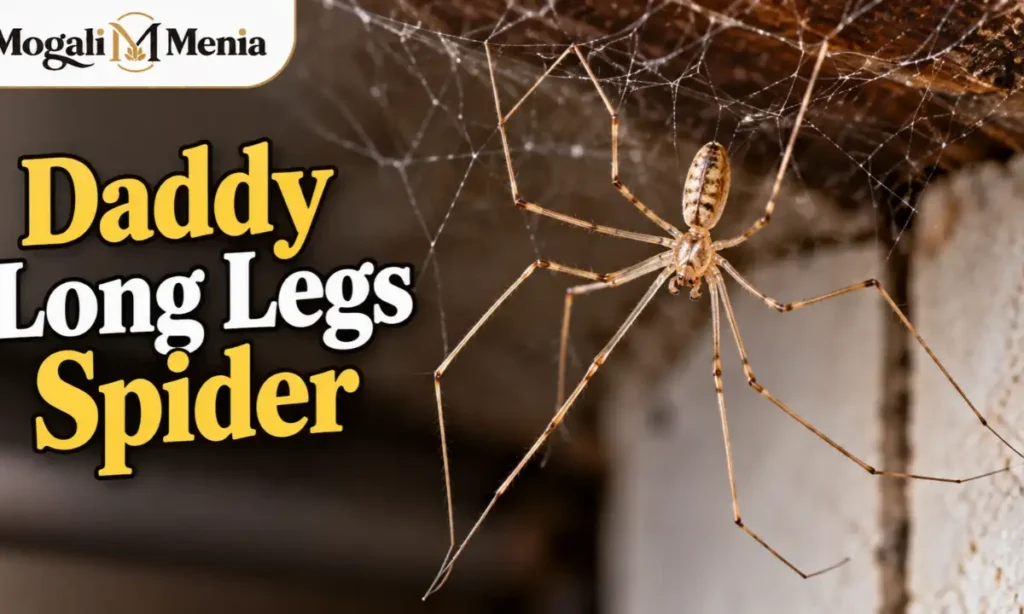
Daddy Long Legs Spider is a known spider that stands out due to its tiny body and elongated legs. The spider is usually found in the corners of houses, in garages, cellars, and sheds, among other quiet places where it forms a loose web to trap small insects. Its unique look makes it a good subject for wildlife photography and pictures of Nature and articles about the animal.
“Daddy long legs” is not only the common name of the spider but also a general term applied to various creatures. First of all, this name applies to spiders, known as cellar spiders, and to harvestmen, which belong to another order of arachnids. Also, crane flies receive the same common name despite being insects having six legs. This information helps to differentiate the animal from others when viewing pictures of it.
What Does a Daddy Long Legs Spider Look Like?
The physical features that characterize a daddy long legs spider include a small and slim body, and long and very thin legs totaling to eight. The body color may be pale brown, grey, cream or yellow depending on the specific species. Some have dark patches while others are almost transparent when exposed to bright light.
Cellar spiders tend to hang upside down in irregular webs with their legs widely spread out from their bodies. The long legs are highly receptive to vibrations in the environment created when other living things come into contact with the web.
Daddy Long Legs Spider Pictures and Photo Types
Close-Up Pictures of Daddy Long Legs Spiders
Details such as those of its body segments, its tiny legs, eyes, and hairs are made visible through close-up photography, which can even reveal the texture and coloration of the body of the creature. This is very helpful in identifying the physical features of the creature.
Daddy Long Legs Spider in Its Web
The cellar spider is frequently captured while suspended from its web in the corners of rooms, ceilings, garages, and sheds. Its untidy webs are generally messy in appearance when compared with the orderly webs that can be seen on some other spiders. The spider will wait for its prey to get entangled before attacking it.
Also Read About: Blue Bottle Jellyfish, Symptoms, Treatment & First Aid
Daddy Long Legs Spider on a Wall
Pictures of spiders known as daddy long legs that can be found on walls will help one notice the effect of the long legs on the mobility of the spiders. One might see such spiders near windows, ceilings, cupboards, among others. A spider found on a simple wall is easy to view.
Daddy Long Legs Spider on Leaves and Plants
Images taken outdoors can include those of long-legged spiders seen resting on leaves, branches, tree trunk, and even on other plant materials. Some images of these spiders are that of harvestmen and not cellar spiders. Unlike cellar spiders, harvestmen do not create webs to catch preys, while the body is just an oval shape.
Daddy Long Legs Spider on a White Background
Pictures of spiders against a white background are usually helpful in identification and education. Since there is no distraction around, one can easily look at the form of the spider’s body, its legs’ length and color, and all the other features. Pictures like that may be handy when comparing cellar spider with harvestman and crane fly.
Daddy Long Legs Spider with Eggs
The females of cellar spiders are known to have different ways of carrying their eggs or egg clusters based on different species. In the case of long-bodied cellar spiders which are usually photographed, the females do not cover their eggs in a heavily coated egg sac but keep them in loose egg clusters in their mouths.
Types of Creatures Known as Daddy Long Legs
The common name can describe different animals, so it is important to distinguish between them.
| Type | Main Characteristics | Common Habitat |
|---|---|---|
| Cellar spider | Small body, eight very long legs, builds irregular webs | Houses, basements, garages and sheds |
| Harvestman | Rounded or oval-looking body with long legs; does not build prey-catching webs | Gardens, forests, leaf litter and vegetation |
| Crane fly | Insect with six legs, wings and a slender body | Gardens, lawns, fields and other outdoor areas |
Daddy Long Legs Spider Habitat
These spiders like to dwell in concealed spots where they can construct their webs without disturbance. They are generally found in basements, cellars, garages, storage rooms, sheds, ceiling corners, and areas behind furniture. Some types of cellar spiders are also known to thrive in the outside world, residing in cracks between rocks, inside cavities of trees, and in plants.
Distribution depends upon the type of cellar spider, as there are many types of these spiders that have dispersed themselves within human societies. For indoor dwelling, they find an appropriate habitat along with a consistent source of food, such as small insects and arthropods. Harvestmen spiders are normally found in vegetation outdoors.
What Do Daddy Long Legs Spiders Eat?
The cellar spiders are known to be predatory creatures whose prey is small insects and arthropods. This spider is capable of feeding on various types of prey such as flies, mosquitoes, moths, and any other small animals that get trapped in its web. It might even prey on other species of spiders.
| Food Source | How It Is Obtained |
|---|---|
| Small flies | Captured in the web |
| Mosquitoes | Trapped when they contact the web |
| Moths and other insects | Caught in the web when available |
| Other spiders | Captured by some cellar spider species |
| Small arthropods | Captured opportunistically |
Are Daddy Long Legs Spiders Dangerous?
Cellar spiders are known to be generally harmless to humans. The venom of the cellar spider is used to paralyze the prey, but it is not considered medically important to humans. Cellar spiders are shy creatures and tend to stay in their web or even avoid humans who disturb them.
The myth about the daddy long legs spiders being one of the most venomous spiders in the world is not substantiated by any scientific data. Besides, this myth tends to confuse the toxicity of venom with the probability of biting and venom’s effect on humans. There is no reason to touch an unknown spider, but meeting a cellar spider in some secluded place should not make you worry.
Interesting Facts About Daddy Long Legs Spiders
- Cellar spiders have eight legs and belong to the true-spider group.
- Their long legs help them sense vibrations in their webs.
- Some cellar spiders vibrate rapidly in their webs when threatened, making them appear blurred.
- Certain species can prey on other spiders.
- Harvestmen are arachnids, but they are not true spiders.
- Crane flies are insects, not spiders, and have six legs.
- Cellar spiders can help reduce the number of small insects in and around homes.
- Their delicate appearance hides effective hunting behaviour.
FAQs
What is a daddy long legs spider?
A daddy long legs spider usually refers to a cellar spider from the family Pholcidae. It has a small body, very long legs, and commonly builds loose webs in sheltered places.
Where are daddy long legs spiders commonly found?
They are often found in house corners, basements, garages, sheds, ceilings, and other quiet areas. Some species live outdoors in sheltered habitats.
Do daddy long legs spiders make webs?
Yes. Cellar spiders build irregular webs that help them catch insects and other small arthropods. Harvestmen do not make prey-catching webs.
Are daddy long legs spiders poisonous?
Cellar spiders possess venom for catching prey, but their venom is not considered medically significant to humans. The common name also refers to animals that are not true spiders.
What is the difference between a cellar spider and a harvestman?
A cellar spider has two main body sections, eight legs, and silk-producing spinnerets. A harvestman has a body that appears as one compact unit and does not build prey-catching webs.
Why are daddy long legs spiders photographed so often?
Their extremely long legs, delicate appearance, and distinctive webs make them interesting subjects for macro photography, wildlife pictures, and educational identification images.
Conclusion
The Daddy Long Legs Spider is an intriguing arachnid whose long legs, small body, and web-building behaviour make it a popular subject for wildlife photography. Pictures may show it hanging in a web, resting on a wall, sitting among leaves, or appearing in a detailed close-up. However, the common name also applies to harvestmen and sometimes crane flies, so the animal shown in a photograph may not always be a true spider. Recognizing these differences makes it easier to understand its appearance, habitat, and behaviour.
Also Read About: Red-bellied Black Snake, Habitat, Venom, Diet & Facts