
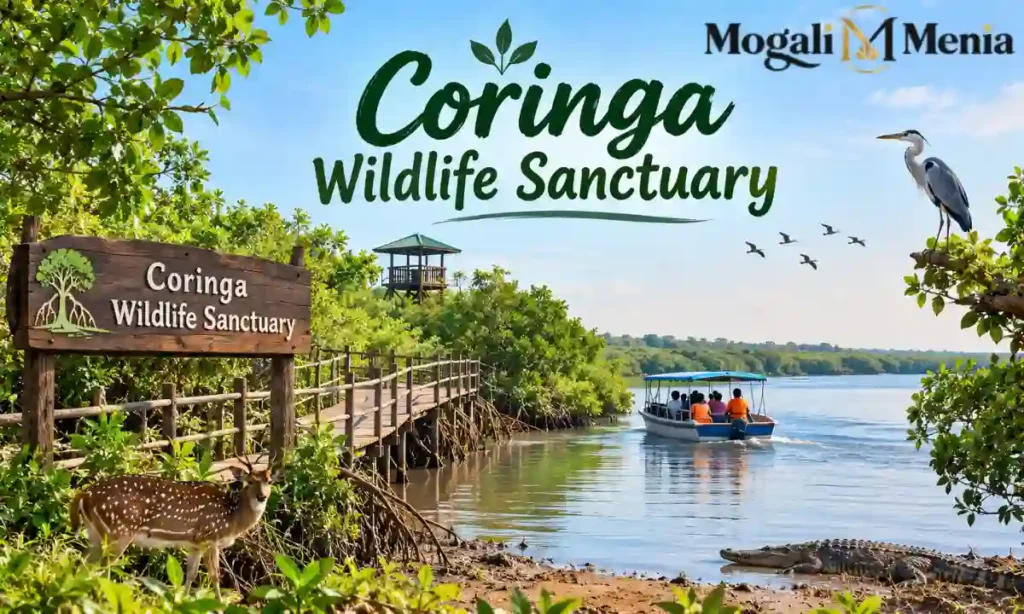
Coringa Wildlife Sanctuary is one of the most unique Natural tourist spots around Kakinada, Andhra Pradesh. While usual wildlife sanctuaries are known for their dry forests, grasslands and large animals, Coringa is famous for the thick mangrove ecosystem, tides and coastal areas. At the sanctuary, visitors have a chance to take walks in the mangrove forests, relax in the serene environment and see the intersection of river and sea.
This place will appeal to nature fans, photographers and travelers interested in unique scenery. Wooden bridges, mangrove trails, vantage points and boat tours are just some of those features that distinguish Coringa from the usual forest attraction. In general, the place will be more about exploring the coastal ecosystem rather than seeing the large animals there.
Why Travellers Love Coringa Wildlife Sanctuary
The biggest draw for tourists is the chance to walk in a real mangrove setting. Through elevated wooden walkways, tourists get a chance to walk through terrain where the floor is muddy and wet, giving them a completely different experience from a typical forest walk. Boat rides are also common favorite experiences. Based on prevailing circumstances, boat rides will give tourists a chance to ride through waters enclosed by mangroves and heading to the point where the rivers meet the sea.
About Coringa Wildlife Sanctuary
Coringa Wildlife Sanctuary is situated near Kakinada, in the state of Andhra Pradesh. It is one of the components of the Godavari delta ecosystem. The Coringa Wildlife Sanctuary is home to numerous mangrove plants and wetlands, which serve as a home to various kinds of birds, fish, reptiles, etc. It is not a typical place to go for a safari. The sanctuary offers walking tours on trails and wooden walkways, observation posts, and water-based activities.
Coringa Wildlife Sanctuary Quick Facts
| Particular | Details |
|---|---|
| Name | Coringa Wildlife Sanctuary |
| Location | Near Kakinada, Andhra Pradesh |
| Region | Godavari Delta |
| Main Attraction | Mangrove Forest |
| Ecosystem | Coastal Wetland and Mangrove |
| Famous Experience | Mangrove Walk and Boating |
| Popular Wildlife | Birds, Fish, Reptiles, Otters and Other Wetland Species |
| Main Viewpoint | Watchtower |
| Nearby City | Kakinada |
| Best For | Nature Lovers, Families, Birdwatchers and Photographers |
| Recommended Season | Winter and Pleasant Weather Months |
Why Is Coringa Wildlife Sanctuary Famous?
The Coringa Wildlife Sanctuary is popular because of its mangrove forest and its biodiversity along the coast. It serves as an important component of the Godavari delta ecosystem and houses wildlife which thrives in wetlands, tidal rivers, and mangroves. One interesting feature about the Coringa Wildlife Sanctuary is the presence of the fishing cat which is a wetland adapted wildcat. The other notable aspect of this wildlife sanctuary is that it is perfect for bird watching since it has creeks, mudflats, and forests.
Coringa Mangrove Forest
Mangrove forests constitute the nucleus of Coringa Wildlife Sanctuary. These plants have been designed in such a way that they can sustain themselves in saltwater and flood-prone coastal regions. The tangled roots of these plants help to strengthen the shore and offer shelter to aquatic life. Moving on foot or in some other mode of transport through the mangrove terrain provides one with an entirely new experience of wildlife. Instead of normal jungles, one comes across creeks and trees.
The Mangrove Forest Experience
Coringa should be considered a mangrove reserve as opposed to a normal jungle. This type of forest thrives in a coastal region affected by tidal forces, salt water, and mud. The roots of mangroves form unique structures and create green passages surrounding the waterways. One can move along elevated wooden walkways that have been constructed on top of the wet ground. In such a way, it becomes easier to explore the mangroves without harming the delicate soil. The walk itself becomes an enjoyable part of the whole Coringa adventure.
Traveller Rating and Reviews
Corina Wildlife Sanctuary has a rating of 4.1 out of 5 according to more than 80 reviews posted on the travel website cited above. The sanctuary has also been identified as one of the top activities for tourists in the city of Kakinada, proving its popularity as an attractive tourist destination for nature lovers. The opinions of tourists who have visited this sanctuary have been quite positive regarding the mangrove terrain, wooden walkways, boat rides, and tranquil environment. In addition, the watchtower and photography opportunities have also received good ratings from tourists visiting this sanctuary.
Wooden Walkways Through the Mangroves
The walkways made of wood are some of the most popular attractions at the sanctuary. These structures allow visitors to traverse through the mangrove forest without having to step on the wet muddy ground. Travelling through the walkways offers tourists an opportunity to get a better look at the mangrove trees, their roots, and even the environment around them. It is a relaxing pastime and requires no strenuous hiking activity.
Boating at Coringa Wildlife Sanctuary
Boating is one of the things that are regularly talked about by tourists when they visit Coringa. Boating takes the traveller to a new experience of looking at the ecosystem because the forest can be viewed from the waters and not from the footpath. The boat may take tourists through the backwaters and the coastal channels, even taking them to the region where the river joins the ocean. Boating may be subject to certain conditions such as tide and weather, thus tourists need to confirm its availability first.
Watchtower at Coringa Wildlife Sanctuary
The watchtower gives you a view that towers above the mangroves. Looking down from this elevated point, one can get a view of the lush vegetation that looks like a sea of green that covers the entire wetlands. This spot is highly valued for photography since one can capture the unique arrangement of the mangroves and the streams from this height.
Wildlife at Coringa Wildlife Sanctuary
While Coringa may be classified as a wildlife sanctuary, there is certainly something unique about the wildlife found in this sanctuary compared to other places where there is wildlife that includes elephants, tigers, or large numbers of deer. The main value of this place from the ecological point of view is that of a mangrove and wetland environment. One can find birds, fish, monkeys, and other animals depending upon the season and place.
Birdwatching at Coringa Wildlife Sanctuary
There are good prospects for bird watching in Coringa since mangroves, mud flats, and water channels serve as places for food and shelter to various types of birds. Moreover, migratory birds can also be spotted during appropriate seasons. But, of course, sightings are unpredictable by nature. Some tourists claim that they managed to see a number of birds on their tours, whereas some visited Coringa when there was less activity among birds. One needs to bring binoculars and visit in mornings.
Mangrove Ecosystem and Biodiversity
The mangrove ecosystem of Coringa is very precious since it provides a unique natural bridge between terrestrial and aquatic ecosystems. Mangrove roots create nurseries for various aquatic animals such as fish and crabs. Moreover, this type of trees provide shelter for birds and other small animals. Apart from that, mangroves contribute greatly to soil stabilization. In this way, Coringa is valuable not only for tourism but also for ecology.
Traveller Experience: Nature Lovers
Nature enthusiasts usually like Coringa since it is unique in its offering. With mangrove trees, water channels, wooden footpaths, and sea breeze, one feels relaxed. The tourists who try to get to know the significance of mangroves would definitely have a better experience. In this place, it is not about sighting animals but rather witnessing a strange eco-system that is not seen in everyday life of a city dweller.
Traveller Experience: Family
Coringa is a nice place for families to spend some time together as most of the places there do not involve hard trekking. However, families need to make sure that their children stay close to them especially in case of walking on water routes and raised pathways. It is important for the visitors to follow all the instructions concerning the use of plastic, garbage, and forbidden zones.
Coringa Wildlife Sanctuary and Godavari Delta
The sanctuary is situated in the large delta of the Godavari River, which constitutes an important wetland area in Andhra Pradesh. Various water courses run through the coastal landscape to form a zone where both forests and water bodies coexist. The delta eco-system serves as a home for fishes, prawns, crabs, molluscs, birds, and many other organisms living in water.
Fishing Cat at Coringa Wildlife Sanctuary
Fishing cat is one of the most fascinating animals in association with Coringa Wildlife Sanctuary. Most wild cats tend to live in dry forests, but fishing cats are more suited for wetland habitats including rivers, mangroves and marshes. They have partially webbed toes and are good swimmers. They may feed on fishes among other aquatic animals. It is hard to spot a fishing cat in its natural habitat since they are shy and elusive, being mostly active during quiet hours.
Otters and Other Mammals
Another group of fauna that is significant to the ecosystem of the sanctuary is the otters. The presence of the otters indicates the nature of the water body that should have adequate amounts of aquatic fauna like fish to sustain the otters. Other fauna linked with the sanctuary are the jackals, boars, and some smaller fauna.
Birds at Coringa Wildlife Sanctuary
Coringa is the right place to visit if you love watching birds since their habitats are made up of mangroves, creeks, and mudflats, which act as feeding and nesting grounds to many kinds of birds. Birds like egrets, herons, and kingfishers among others can normally be associated with this sanctuary. Bird life is even more fascinating during the migratory period when water birds and shore birds can congregate in mudflats and shallow waters in search of food sources.
Traveller Experience: Photography
There are a lot of opportunities for photographing nature at Coringa. Wooden platforms, interlacing roots of the mangroves, reflections in the water, birds, and the coastal scenery give a totally different look to Coringa compared to other wildlife parks. The watchtower can prove very helpful in taking landscape photos since it will allow a broad overview of the mangrove canopy. Early morning and late evening can provide nice lighting conditions for photos, but it is important to comply with the designated visiting hours.
Traveller Experience: Calm Walk in the Forest
One of the easiest things to enjoy in Coringa is walking amidst the greenery. The raised platforms create a sensation of being in the forest with still having the water and the coast around. Walking can be invigorating due to the breeze and quietness. People who prefer a calm nature experience rather than watching wildlife can like this option more.
Things to Know Before Visiting
Coringa being a wetland and mangrove ecosystem, the trip experience is quite unique when compared to a typical dry land forest area. The soil near the mangrove forests may stay muddy and soggy, and that is why raised walkways have been installed at many places here. Restrictions on plastics play an important role in this sanctuary. Tourists must ensure that they do not bring extra plastic bottles, covers and disposables to this sensitive area.
Also Read About: Netravali Wildlife Sanctuary, Timings, Wildlife & Travel Guide
Migratory Birds in Coringa Wildlife Sanctuary
The appearance of migratory birds gives a new aspect to Coringa’s wildlife tourism. Migrating birds from cold climates make use of suitable wetland and coastal ecosystems as a temporary site for food and rest. The best time to view migrating birds is usually in the colder season. Visits early in the morning prove to be fruitful as the birds are more active and the soft light makes for good pictures too.
Reptiles and Aquatic Wildlife
There is provision for diverse reptile and marine animals to have suitable habitat in the mangrove ecosystem. The mud flats, creeks, and dense vegetation provide hiding grounds as well as places where the reptiles can get their food from. The water bodies are also very useful for fish, crabs, prawns, and other marine animals. They form the base of the food chain in the sanctuary.
Coringa Wildlife Sanctuary Mangrove Walk
Some of the enjoyable methods by which one can get a feel of the sanctuary include the mangrove trails and visitor sites. Exploring the forest in the mangrove habitat gives one the opportunity to see the flora up close and learn how the coastal forests work. The atmosphere is serene, especially in the morning. One must walk along the designated paths and refrain from disturbing or destroying any of the mangroves.
Photography at Coringa Wildlife Sanctuary
Photographing nature and landscapes in Coringa provides great scope to produce some exceptional shots which may differ from regular forest photographs. Wild animal and bird photography should be done by keeping a safe distance. Early morning and late evening may offer natural light, but visitors must strictly adhere to the timings as per the sanctuary guidelines.
Coringa Wildlife Sanctuary Timings
The timing of the sanctuary might differ depending on the regulations set by the local forest department and the weather or season. One needs to ensure that he has all the information regarding the operational timings of the sanctuary before visiting, especially if one is visiting to take a boat trip or indulge in any other activity related to nature. The morning time is considered better for observing wildlife and birds.
Nearest Railway Station to Coringa Wildlife Sanctuary
Kakinada offers connectivity through railroads, and it is the most feasible place via railroad for travelers visiting Coringa. According to their train schedule, travelers can travel from Kakinada’s railway station and then use other means for the rest of the journey. Travelers coming through trains should make arrangements for their onward journey prior to the early hours of the day.
Nearest Airport to Coringa Wildlife Sanctuary
One of the closest airports that travellers use to visit the Kakinada area is Rajahmundry Airport. Visitors can further travel to their destination through the road. The travel time will depend on the route, traffic, and road conditions. Travellers using the airport can think about hiring a private taxi or local transport to reach the sanctuary.
Attractions near Coringa Wildlife Sanctuary
There are many attractions that one can visit in the Kakinada area apart from Coringa. For those who like beaches and the sea, they can opt to visit Kakinada Beach, which is a famous attraction within the Kakinada area. The delta areas close to Coringa can be an added attraction for visitors to the region. Travellers can also visit the temples, beaches, and other places within the region.
Where to Stay Near Coringa Wildlife Sanctuary
Kakinada serves as the ideal location to arrange for accommodation owing to greater options available there as compared to the sanctuary itself. Guests will find various options for hotels and guest houses that can accommodate visitors according to their budget requirements. Staying at Kakinada also makes it easy for guests to access restaurants and other facilities. For nature lovers looking for a tranquil experience, they can search for accommodation near the sanctuary, depending on availability.
Coringa Wildlife Sanctuary – Safety Rules
Guests must abide by the directions of the forest officers and confine themselves to the visitor zones. Wildlife must never be disturbed, chased or fed under any circumstances, even if the animal seems tame. Silence becomes highly important in a bird rich habitat. Music, shouting and noise from vehicles might affect the wildlife.
Conservation Importance of Coringa Wildlife Sanctuary
Coringa Wildlife Sanctuary acts as an important habitat for preserving one of the mangrove ecosystems in the country that is very valuable. Mangroves act as the breeding and nursery sites for aquatic creatures and also help prevent erosion in coastal areas. These forests are also important for birds and wetland-dependent species. Conservation of Coringa helps in benefiting the wildlife as well as the natural ecosystems around. Responsible Tourism may help people understand the importance of conservation of such delicate ecosystems.
Why Is Mangrove Important?
Mangroves play several ecological roles. They hold the soil in coastal areas together by acting as roots; thereby preventing erosion and sheltering young fish among other aquatic organisms. They also offer habitat to birds, reptiles, mammals, and insects and contribute to the functioning of the food chain in the coastal areas. This makes mangrove forest conservation crucial for wildlife and coastal communities.
Travel Tips for Coringa Wildlife Sanctuary
Visit the sanctuary in the colder months and also consider starting out early in the day. Dress comfortably and wear appropriate clothes and shoes that are suited for outdoors. Don’t forget to carry water bottles, binoculars, sunscreen, etc. Always adhere to sanctuary guidelines and avoid disturbing wildlife. In case you plan to go boating, find out ahead of time about its feasibility and other requirements since water levels, weather, and local laws can impact its operation.
Coringa Wildlife Sanctuary: Conclusion
Coringa Wildlife Sanctuary is a unique wildlife location which has mangrove forests and coastal wetlands making it very different from other inland wildlife sanctuaries. The sanctuary has a special place on the map because of the fishing cat habitat, variety of birds, tidal creeks, and picturesque setting. It is also a significant spot in terms of conserving nature and eco-tourism. For tourists travelling to Kakinada, the Coringa is a wonderful chance to see the natural side of the Godavari delta.
Food and Facilities
Traveler feedback suggests that there might be a few basic facilities providing food and refreshment near the destination; however, tourists must not rely completely on them for getting meals. The facilities provided have been found to be quite limited in comparison to big tourist destinations. Kakinada is a much better choice for restaurants and refreshments etc. Tourists should keep essential items with themselves while planning for longer trips.
Coringa Wildlife Sanctuary Timings
The visiting timetable can be altered depending on the local administration and weather conditions. The visitors’ report shows that the closing time used to be around 5 PM, but it is advisable to check out the present visiting timetable prior to going. The mornings and early afternoons can be considered comfortable times for touring the sanctuary.
Coringa Wildlife Sanctuary Entry Fee
The entry charges have differed based on the mode of booking and the time period. The past traveler reports have referred to different ticket costs based on whether the tickets have been booked online or offline. There have even been instances where online ticket costs were lower and counter rates were higher. As these charges are subject to variation, it is advised to confirm the latest cost before visiting.
How to Reach Coringa Wildlife Sanctuary
The Coringa Wildlife Sanctuary is near Kakinada and is easily accessible via road transport. Tourists coming to Coringa from Kakinada need to follow the road that leads to Yanam and continue their journey to the sanctuary. Private vehicle and taxi services are appropriate means to access this tourist destination. Travelers making use of navigation services need to take care of the road signs since the roads and entrances to this tourist destination may not be marked accurately in the application.
Coringa Wildlife Sanctuary from Kakinada
The location of Coringa makes it a nearby half-day or full-day tour destination for tourists visiting Kakinada. This destination is accessible through road transport from Kakinada. Tourists can enjoy a few hours at the place, exploring its different spots such as the mangrove pathways and watchtowers. For those going on boating tours, extra time will be required.
Nearby Places to Visit
It would not be difficult to combine Coringa with other places of interest around Kakinada. Apart from the beach at Kakinada, there is the Hope Island that offers an exciting experience in this part of the world. There are various parks and natural wonders that one can see depending on the time available. It is a good idea to combine Coringa with other destinations when visiting Kakinada.
What Is Unique about Coringa?
Coringa is unique because of the fact that the main point of interest is the mangrove forest and not animals found within the forests. Visitors walk across the wetlands and waterways and observe the coastal forests. It is a unique experience for visitors that have never seen any mangrove forest before. It shows how forests can thrive in saline and tidal waters.
Is Coringa Wildlife Sanctuary Worth Visiting?
A visit to Coringa Wildlife Sanctuary can be considered if you love nature, mangrove forests, walking, photography, and boating. The travel sites usually mention the unique scenery and the pleasure of walking in the mangroves. The wildlife sanctuary will not appeal to those visitors who are looking forward to a typical wildlife adventure with guaranteed encounters with big animals. But for those with interest in coastal ecosystem, Coringa is certainly a special place to visit.
Who Should Visit Coringa Wildlife Sanctuary?
Coringa can be visited by family groups, couples, group of friends, nature enthusiasts, bird watchers and photography buffs. The place is useful for students and any individual who wants to learn about the mangrove ecosystem. Adventure loving tourists may love boating and walking along the raised forest trails. Tourists who like to have a peaceful experience at natural sites can simply spend time amidst the greenery, breeze and tranquil environment.
Best Time to Visit Coringa Wildlife Sanctuary
Cooler months are considered better to visit Coringa Wildlife Sanctuary. Winter season is pleasant for walking and spending time within the mangroves. Bird watching tourists can plan their visit during the migratory season, but bird sightings cannot be guaranteed. It is also advisable not to plan the visit based on a specific wildlife species since the environment determines what tourists get to see.
Safety and Visitor Tips
You need to wear comfortable shoes as there are walking paths in the sanctuary and outdoor area. Mosquitoes may trouble you, especially after sunset, and insect repellent will help you make the most of your stay here. Don’t feed the animals and birds. You should only walk through the specified walkway and follow boating guidelines, and don’t enter any restricted water bodies. It’s important not to litter as plastic and other waste can greatly affect the mangroves.
Reviews of Coringa Wildlife Sanctuary: Overall Traveller’s View
Generally speaking, there is a positive opinion about Coringa from the side of the visitors. They find the mangrove forest unique, peaceful, and worth visiting. Wooden walkway, boating, watchtower and coastline views are mentioned multiple times in reviews. However, there are some disadvantages of Coringa, such as basic facilities, not consistent wildlife spotting and, in some cases, issues with the food or maintenance. Thus, it can be said that Coringa can be visited due to its natural beauty.
FAQs
What is Coringa Wildlife Sanctuary famous for?
Coringa Wildlife Sanctuary is famous for its mangrove forests, tidal waterways, wooden walkways, birdlife, coastal ecosystem and boating experiences.
Where is Coringa Wildlife Sanctuary located?
Coringa Wildlife Sanctuary is located near Kakinada in Andhra Pradesh and forms part of the Godavari delta region.
Is Coringa Wildlife Sanctuary a typical jungle?
No. Coringa is primarily a mangrove and coastal wetland ecosystem. Its landscape is dominated by waterways, muddy wetlands and mangrove vegetation rather than dry forest.
Is boating available at Coringa Wildlife Sanctuary?
Boating has been one of the major attractions associated with Coringa. However, availability can change because of weather, tides and local operational conditions.
How long does it take to explore Coringa Wildlife Sanctuary?
Many travellers spend around two to three hours exploring the main attractions, although the duration can be longer if boating and additional activities are available.
Can we see wild animals at Coringa Wildlife Sanctuary?
Coringa supports wildlife, but it is not primarily known for guaranteed large-animal sightings. Birds and smaller wildlife are more realistic possibilities during a normal visit.
Is Coringa Wildlife Sanctuary good for families?
Yes. The mangrove walkways, viewpoints and nature experience make it suitable for families, provided children are supervised around elevated paths and waterways.
What should I carry to Coringa Wildlife Sanctuary?
Visitors should carry drinking water where permitted, comfortable footwear, sun protection, insect repellent, binoculars and a camera. Plastic restrictions should always be followed.
What is the best attraction inside Coringa Wildlife Sanctuary?
The mangrove forest and elevated wooden walkway are among the main attractions. The watchtower and boating experience are also popular with visitors when available.
Is Coringa Wildlife Sanctuary worth visiting?
Yes. It is particularly worth visiting for people who enjoy mangrove forests, nature walks, photography, birdwatching and boating. It offers a different experience from conventional wildlife sanctuaries.
Conclusion
Coringa Wildlife Sanctuary is definitely a unique natural attraction near Kakinada as its mangrove forest, high wooden walkways, waterways, and coastal location make it quite different from conventional wildlife sanctuaries.
For all those who love nature photography and want to have a relaxing time outdoors, visiting Coringa is definitely worth considering while planning a trip to Kakinada. The best thing would be to visit with realistic expectations and utilize the opportunities offered by the mangrove forest and boat trips.
Also Read About: Debrigarh Wildlife Sanctuary, Safari, Wildlife & Travel Guide