
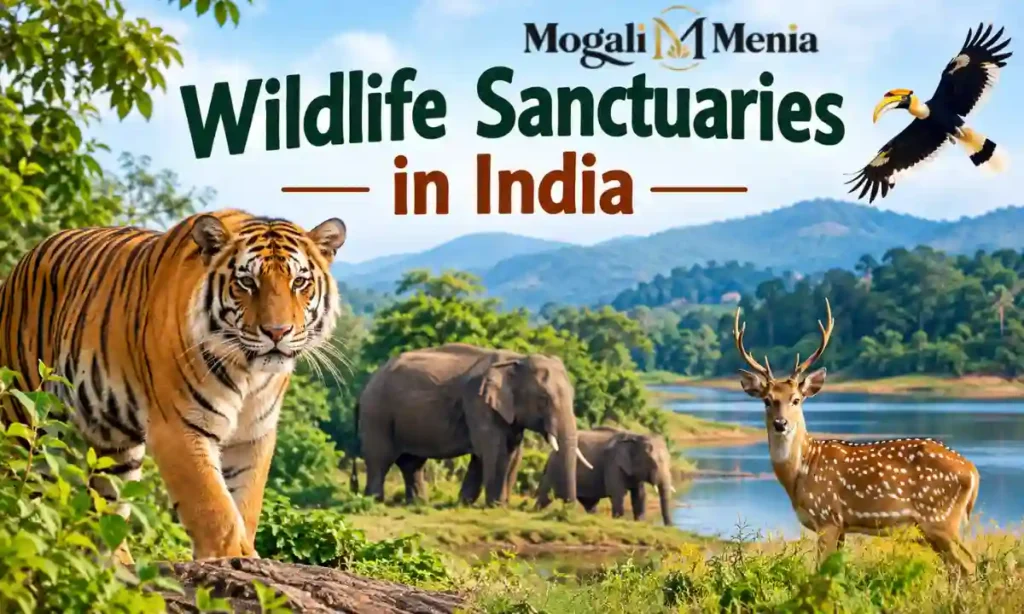
India has been blessed with a wide range of forests, hills, grasslands, wetlands, rivers, and coastal ecosystems. These natural habitats of India are preserved through wildlife sanctuaries which provide safety zones for animal life, bird life, reptile life, and other Natural species. From the Asiatic lions in Gujarat and one-horned rhinos in Assam to elephants, leopards, deers, exotic birds, and Himalayan wildlife, each wildlife sanctuary is known for its own natural environment.
Not only do these wildlife sanctuaries play an important role in protecting wildlife, but they also offer interesting experiences for those who love nature and want to visit new places. Many sanctuaries provide opportunities for wildlife safaris, bird watching, nature walking, photography, boating and forest trekking, among others. With so many wildlife sanctuaries in India, they provide travelers with a great way to discover the natural diversity of the country.
What Is a Wildlife Sanctuary?
A wildlife sanctuary refers to an area which has been reserved with a view to conserve wild animals and their natural habitats. There may be some human activities allowed within the boundaries of the sanctuary, but only in a controlled manner. In contrast to regular forests, sanctuaries offer extra safety to the wildlife from any form of threats including hunting and habitat destruction. Wildlife sanctuaries can be found throughout most parts of India. Every sanctuary has unique geography, climatic conditions, flora, and fauna.
Wildlife Sanctuaries in India Quick Overview
| Particular | Details |
|---|---|
| Country | India |
| Main Purpose | Wildlife and habitat conservation |
| Major Landscapes | Forests, grasslands, wetlands, mountains, deserts and mangroves |
| Wildlife | Mammals, birds, reptiles, amphibians and aquatic species |
| Popular Activities | Safari, birdwatching, nature walks and photography |
| Best Season | Depends on the sanctuary |
| Suitable For | Wildlife lovers, photographers, families and nature enthusiasts |
List of Wildlife Sanctuaries in India
India has hundreds of wildlife sanctuaries spread across different geographical regions. Some are famous for large mammals, while others are especially important for birds, reptiles, wetlands, marine species, or unique ecosystems.
| Wildlife Sanctuary | State | Famous For |
|---|---|---|
| Gir Wildlife Sanctuary | Gujarat | Asiatic Lion |
| Indian Wild Ass Sanctuary | Gujarat | Indian Wild Ass |
| Wild Ass Sanctuary | Gujarat | Desert wildlife and wild ass |
| Periyar Wildlife Sanctuary | Kerala | Elephants and scenic lake |
| Wayanad Wildlife Sanctuary | Kerala | Elephants and forest wildlife |
| Chinnar Wildlife Sanctuary | Kerala | Dry forest and diverse wildlife |
| Dandeli Wildlife Sanctuary | Karnataka | Hornbills and forest wildlife |
| Bhadra Wildlife Sanctuary | Karnataka | Tigers, elephants and birds |
| Ranganathittu Bird Sanctuary | Karnataka | Migratory and resident birds |
| Nagarhole Wildlife Sanctuary | Karnataka | Tigers and elephants |
| Binsar Wildlife Sanctuary | Uttarakhand | Himalayan flora and fauna |
| Kedarnath Wildlife Sanctuary | Uttarakhand | Himalayan wildlife |
| Govind Wildlife Sanctuary | Uttarakhand | Himalayan forests and wildlife |
| Askot Wildlife Sanctuary | Uttarakhand | Himalayan species |
| Chail Wildlife Sanctuary | Himachal Pradesh | Himalayan wildlife |
| Great Himalayan Wildlife Sanctuary | Himachal Pradesh | Mountain biodiversity |
| Nargu Wildlife Sanctuary | Himachal Pradesh | Himalayan landscape |
| Sariska Wildlife Sanctuary | Rajasthan | Tigers and dry forests |
| Tal Chhapar Wildlife Sanctuary | Rajasthan | Blackbuck and grasslands |
| Kumbhalgarh Wildlife Sanctuary | Rajasthan | Leopards and Aravalli landscape |
| National Chambal Sanctuary | Uttar Pradesh, Madhya Pradesh and Rajasthan | Gharial and river wildlife |
| Katarniaghat Wildlife Sanctuary | Uttar Pradesh | Gharial, dolphins and forest wildlife |
| Kishanpur Wildlife Sanctuary | Uttar Pradesh | Tigers and swamp deer |
| Dudhwa Wildlife Sanctuary | Uttar Pradesh | Swamp deer and diverse wildlife |
| Hastinapur Wildlife Sanctuary | Uttar Pradesh | Ganga plains wildlife |
| Pobitora Wildlife Sanctuary | Assam | One-horned rhinoceros |
| Hoollongapar Gibbon Wildlife Sanctuary | Assam | Hoolock gibbons |
| Deepor Beel Wildlife Sanctuary | Assam | Wetland birds |
| Bornadi Wildlife Sanctuary | Assam | Rare wildlife and birds |
| Eaglenest Wildlife Sanctuary | Arunachal Pradesh | Birds and Himalayan biodiversity |
| Pakke Wildlife Sanctuary | Arunachal Pradesh | Hornbills and forest wildlife |
| Nameri Wildlife Sanctuary | Assam | Elephants and river ecosystem |
| Bhitarkanika Wildlife Sanctuary | Odisha | Mangroves and crocodiles |
| Gahirmatha Marine Wildlife Sanctuary | Odisha | Olive ridley turtles |
| Debrigarh Wildlife Sanctuary | Odisha | Gaur and forest wildlife |
| Satkosia Gorge Wildlife Sanctuary | Odisha | Mahanadi river ecosystem |
| Coringa Wildlife Sanctuary | Andhra Pradesh | Mangrove forests and birds |
| Kolleru Wildlife Sanctuary | Andhra Pradesh | Wetland and migratory birds |
| Pulicat Lake Bird Sanctuary | Andhra Pradesh/Tamil Nadu | Waterbirds |
| Point Calimere Wildlife Sanctuary | Tamil Nadu | Blackbuck and coastal birds |
| Mudumalai Wildlife Sanctuary | Tamil Nadu | Elephants and tigers |
| Vedanthangal Bird Sanctuary | Tamil Nadu | Waterbirds |
| Sathyamangalam Wildlife Sanctuary | Tamil Nadu | Tigers and elephants |
| Ranganathittu Bird Sanctuary | Karnataka | Waterbirds |
| Wayanad Wildlife Sanctuary | Kerala | Elephants and birds |
Gir Wildlife Sanctuary, Gujarat
Gir Wildlife Sanctuary is considered as one of the most popular wildlife sanctuaries in India as it is home to Asiatic Lions. This sanctuary is situated in the wider ecosystem of Gir that comprises of dry deciduous forests, grasslands, scrub lands, and seasonal streams. Other than lions, other wildlife seen in Gir include leopards, chital, sambhar, nilgai, wild boars, crocodiles, and many species of birds.
Periyar Wildlife Sanctuary, Kerala
Periyar Wildlife Sanctuary is located in the Western Ghats region and has gained a good reputation for the hill ranges covered with forest and a picturesque lake. The protected sanctuary is home to elephants, gaurs, sambar, wild boars, deers and many bird species. Nature activities in the sanctuary allow visitors to see wildlife and explore the natural environment. Periyar Wildlife Sanctuary is preferred by visitors who look for forests, water bodies and wildlife together.
Wayanad Wildlife Sanctuary, Kerala
Wayanad Wildlife Sanctuary is located in the midst of the thick forests of the Western Ghats region. Wayanad Wildlife Sanctuary acts as a vital link between protected sanctuaries of Kerala and surrounding states. Some of the main attractions of the sanctuary include elephants, deers, gaur, wild boars, monkeys, leopards and many birds.
Dandeli Wildlife Sanctuary, Karnataka
Dandeli Wildlife Sanctuary is well-known for its dense forest, river, waterfalls, and various birds. This sanctuary is highly regarded by bird-watchers since there are many colorful and rare birds available at Dandeli. In addition to the birds, various other animals like elephants, gaurs, deer, wild dogs, leopards, and reptiles can also be seen at Dandeli.
Bhadra Wildlife Sanctuary, Karnataka
The Bhadra Wildlife Sanctuary is located in the Western Ghats and has forests, hills, rivers, and the Bhadra dam. This sanctuary is home to various animals and birds like elephants, tigers, leopards, gaurs, sambhars, and wild boars. It is a major sanctuary of the area and also has picturesque natural surroundings.
Sariska Wildlife Sanctuary, Rajasthan
The Sariska Wildlife Sanctuary is in the Aravalli hills of Rajasthan. It has dry forests, rocky areas, grasslands, and various water bodies where different kinds of wildlife thrive. It is especially famous for the conservation of tigers. Leopards, striped hyenas, chitals, sambhars, nilgais, wild boars, and various kinds of birds also live there.
Tal Chhapar Wildlife Sanctuary, Rajasthan
Tal Chhapar is a special kind of grassland sanctuary that boasts of having the population of blackbucks. As compared to other forest sanctuaries, it has an area of vast open grassland and scrub. The sanctuary is a very good place for visitors who are interested in studying animals in open lands.
Katarniaghat Wildlife Sanctuary, Uttar Pradesh
Katarniaghat Wildlife Sanctuary is located in the Terai belt of northern Uttar Pradesh. Its forest, rivers, wetlands, and grassland areas make it a home to numerous kinds of animals. This sanctuary is famous for housing animals like gharials, Gangetic river dolphins, swamp deer, crocodiles, and many birds.
Pobitora Wildlife Sanctuary, Assam
The Pobitora Wildlife Sanctuary is popular for its population of the Indian one-horned rhinoceros. Though not very large in terms of the area, it boasts a relatively high number of rhinos. The sanctuary provides shelter to the wild boar, buffalo, leopard, birds, and many other wetland and grassland animals. It is easily accessible and serves as a popular wildlife attraction in Assam.
Hoollongapar Gibbon Wildlife Sanctuary, Assam
The Hoollongapar Gibbon Wildlife Sanctuary is particularly significant from the point of view of primate conservation. This sanctuary is home to the hoolock gibbon, the only ape in India. In addition to being home to the evergreen forest, the sanctuary is also rich in other primates and forest animals.
Bhitarkanika Wildlife Sanctuary, Odisha
Bhitarkanika Wildlife Sanctuary is well-known for its large mangrove habitat and saltwater crocodiles. The combination of rivers, creeks, mudflats, and mangrove forests makes up an environment that is unique to the wildlife in Bhitarkanika. This area is significant to birds, reptiles, fish, and other animals that live in wetlands. Boat trips in the water offer an alternate wildlife adventure to the forest safari.
Coringa Wildlife Sanctuary, Andhra Pradesh
One of the important mangrove systems in India’s east coast is Coringa Wildlife Sanctuary. Coringa Wildlife Sanctuary is situated in the Godavari delta and comprises water bodies, mudflats, and coastal vegetation. This wildlife sanctuary is particularly significant for bird watchers and photographers. In addition to being a mangrove system, it provides home and breeding ground to various aquatic and coastal animals.
Vedanthangal Bird Sanctuary, Tamil Nadu
One of India’s famous bird sanctuaries that receives many birds is Vedanthangal. Vedanthangal is a wetland surrounded by agricultural lands. Various bird species like herons, egrets, cormorants, ibises, storks, etc., are found in Vedanthangal during appropriate seasons.
Ranganathittu Bird Sanctuary, Karnataka
Ranganathittu Bird Sanctuary is situated on the banks of Kaveri River and comprises of island areas, wetlands, and riverine ecosystems. Ranganathittu is significant as a breeding and feeding ground for a wide variety of birds. This sanctuary attracts both migratory and resident birds. Boat trips are organized for tourists to see the bird colonies and islands in a controlled manner.
Great Himalayan Wildlife Sanctuary, Himachal Pradesh
Great Himalayan landscape comprises alpine forest, meadows, valley, and mountains. The landscape is home to some rare species found in the Himalayas. Some animals include snow leopards, Himalayan tahr, musk deer, blue sheep, and other many types of birds that are part of the protected landscape.
Wildlife Sanctuaries in Different Regions of India
India’s wildlife sanctuaries can be grouped according to their geographical regions. This makes it easier for travellers to choose a destination based on the type of landscape and wildlife they want to experience.
| Region | Examples | Main Features |
|---|---|---|
| North India | Katarniaghat, Kishanpur, Binsar | Terai and Himalayan ecosystems |
| South India | Periyar, Wayanad, Dandeli | Western Ghats forests |
| East India | Bhitarkanika, Debrigarh | Mangroves, forests and wetlands |
| Northeast India | Pobitora, Hoollongapar, Eaglenest | Rainforests and rich biodiversity |
| West India | Gir, Tal Chhapar, Kumbhalgarh | Dry forests, grasslands and deserts |
| Central India | National Chambal and nearby protected areas | River, forest and grassland ecosystems |
Wildlife Found in Indian Sanctuaries
A wildlife sanctuary in India houses an extraordinary number of species. The type of animal that is present in a wildlife sanctuary depends mainly on its climatic condition, plant life, altitude, water resources, and geography.
Important Mammals
The visitors can expect to see tigers, lions, leopards, elephants, rhinos, gaurs, deer, blackbucks, nilgais, sloth bears, wild dogs, wolves, jackals, monkeys, and others.
Birds
Sanctuaries in India are a natural habitat for both migratory and resident birds. Peafowl, hornbills, storks, herons, egrets, kingfishers, eagles, vultures, ducks, geese, and other species can be seen.
Reptiles
Crocodiles, gharials, snakes, turtles, lizards, and other reptiles are housed in a wildlife sanctuary. Aquatic reptiles thrive in wetland and river sanctuaries.
Best Time to Visit Wildlife Sanctuaries in India
Timing of your visit will differ depending on the location and climatic conditions of the particular wildlife sanctuary. In most regions of India, winter is the most suitable season for wildlife tour, starting from October through March. Summer can also prove to be an ideal season for wildlife observation in certain forest sanctuaries due to the concentration of animals around water sources.
| Season | General Experience |
|---|---|
| October to March | Pleasant weather and good for many sanctuaries |
| April to June | Hot but potentially good for wildlife sightings |
| July to September | Monsoon season; many areas have restrictions |
| Winter | Excellent for birdwatching in many wetlands |
Popular Activities in Wildlife Sanctuaries
Wildlife Sanctuaries provide various activities based on local rules and infrastructure.
- Wildlife safari
- Jeep safari
- Bird watching
- Nature walking
- Wildlife Photography
- Forest walking
- Sailing
- Proper camping
- Visiting interpretation centers
- Nature tours
Wildlife Photography in India
Wildlife Sanctuaries are a great place to indulge in wildlife photography. Dawn and dusk time usually make up good times as there is more activity among the wildlife and also the natural lighting is good. It is important not to get too close to wildlife while indulging in their photography and it is important not to disturb them with your photography gear.
Importance of Wildlife Sanctuaries in India
The wildlife sanctuaries are very important in conserving biodiversity and ensuring that the ecosystem is well balanced. The wildlife sanctuaries ensure that the animals have a secure place to live where they can feed, mate, move about and survive without being interfered with by humans. They help in conducting research on the environment.
Wildlife Sanctuary vs National Park
Wildlife sanctuaries and national parks both protect wildlife, but their management rules can differ.
| Feature | Wildlife Sanctuary | National Park |
|---|---|---|
| Main Purpose | Wildlife and habitat protection | Strong protection of ecosystems and wildlife |
| Human Activities | Some regulated activities may be permitted | Generally more restricted |
| Land Use | Certain rights may continue subject to law | Usually more strictly regulated |
| Tourism | Permitted in designated areas | Permitted in designated areas |
| Conservation | Focuses on wildlife and habitat | Broader ecosystem-level protection |
How to Plan a Wildlife Sanctuary Trip
The visitors need to confirm the operating hours and policies for entrance into the sanctuary, the safari timings, the type of vehicles required, and seasonal restrictions. They must pack comfortable clothes, drinking water, binoculars, cameras, sunscreen, and medication. Noisy discussions and feeding animals are prohibited in the sanctuary.
Wildlife Sanctuary Safety Rules
These animals can be dangerous even if they seem to be at peace. Tourists must follow all guidelines issued by forest authorities and sanctuary personnel. You should not attempt to make physical contact or feed them. Keep yourself in approved cars or follow approved routes and do not play music loudly.
Why Wildlife Sanctuaries Are Important for Tourism
Through wildlife tourism, people get to enjoy nature as they become more aware of conserving it. In addition, responsible tourism helps communities that are living near protected areas benefit economically from such areas. With proper management of tourism, it will be possible for tourists to enjoy wildlife without overburdening the environment.
Top Wildlife Sanctuaries in India for Different Experiences
| Experience | Recommended Sanctuaries |
|---|---|
| Asiatic Lion | Gir Wildlife Sanctuary |
| One-Horned Rhinoceros | Pobitora Wildlife Sanctuary |
| Blackbuck | Tal Chhapar Wildlife Sanctuary |
| Mangrove Wildlife | Bhitarkanika, Coringa |
| Birdwatching | Vedanthangal, Ranganathittu |
| Himalayan Wildlife | Binsar, Kedarnath |
| Elephant Viewing | Periyar, Wayanad, Bhadra |
| River Wildlife | National Chambal Sanctuary |
| Primates | Hoollongapar Gibbon Wildlife Sanctuary |
| Forest and Birdlife | Dandeli Wildlife Sanctuary |
Conclusion
The wildlife sanctuaries of India showcase the rich natural diversity that is found in this land. Whether you choose to view the Asiatic lions of Gujarat, the rhinoceroses of Assam, the Himalayan wildlife, blackbucks, mangrove flora and fauna, riverine wildlife, or any of the multitude of birds in their natural habitat, every sanctuary offers a unique experience. The tourists can have a safari experience, watch birds, take photographs, go on nature trails, and enjoy being amidst nature.
FAQs
How many wildlife sanctuaries are there in India?
India has hundreds of wildlife sanctuaries spread across its states and union territories. The number can change as protected areas are newly designated, expanded, or reclassified.
Which is the most famous wildlife sanctuary in India?
Gir Wildlife Sanctuary is among the most famous because it is associated with the conservation of the Asiatic lion.
Which wildlife sanctuary is best for rhinos?
Pobitora Wildlife Sanctuary in Assam is particularly famous for its one-horned rhinoceros population.
Which wildlife sanctuary is famous for blackbuck?
Tal Chhapar Wildlife Sanctuary in Rajasthan is one of India’s best-known protected areas for blackbuck.
Which wildlife sanctuary is best for birdwatching?
Vedanthangal and Ranganathittu are popular bird sanctuaries, while many other protected wetlands and forests across India also offer excellent birdwatching.
Are wildlife sanctuaries safe for families?
Yes, many wildlife sanctuaries can be visited by families when visitors follow official rules, use authorised vehicles or guides, and maintain a safe distance from wildlife.
What should I carry to a wildlife sanctuary?
Useful items include comfortable clothes, water, binoculars, a camera, sunscreen, a hat, insect repellent, and any essential personal medicines.
Can visitors feed animals in wildlife sanctuaries?
No. Feeding wild animals is unsafe and can disturb their natural behaviour. Visitors should never feed wildlife unless an authorised facility specifically permits a controlled activity.
Which season is best for wildlife sanctuaries in India?
October to March is generally comfortable for visiting many sanctuaries, while some destinations offer better wildlife sightings during the hotter months.
Why are wildlife sanctuaries important?
Wildlife sanctuaries protect animals, plants, habitats, and ecosystems. They also support research, environmental education, conservation, and responsible nature tourism.
Also Read About: Wildlife Institute of India, Reviews, Timings & Visitor Guide